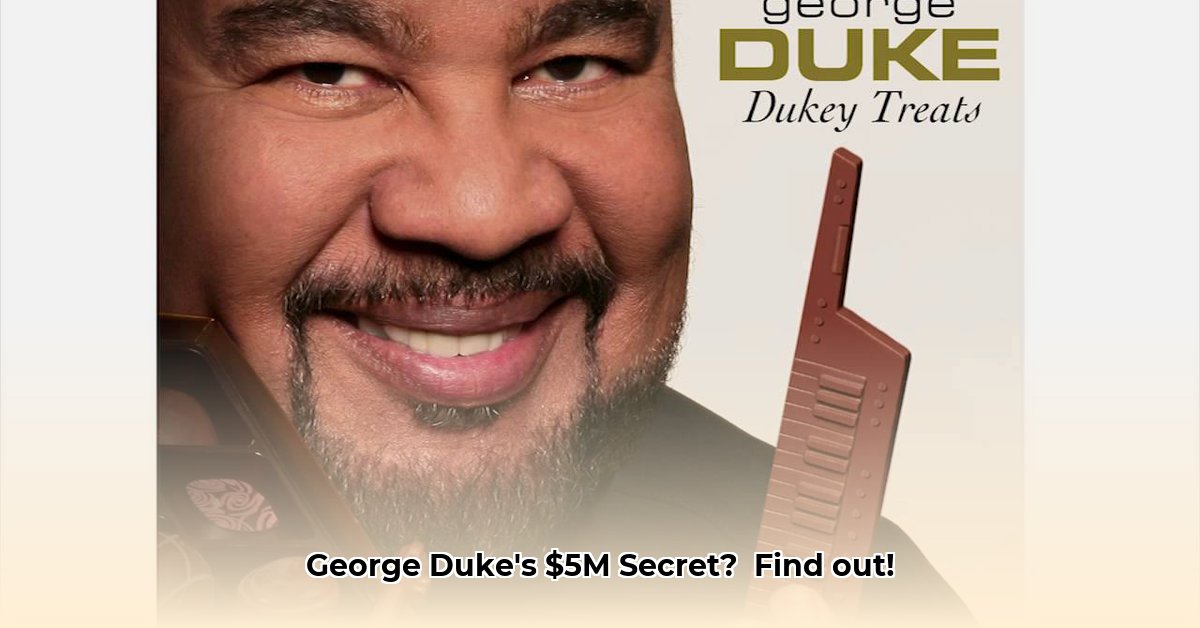
George Duke's Financial Success: A Case Study
George Duke, a name synonymous with smooth jazz and innovative musical collaborations, left behind a legacy that extended far beyond his iconic compositions. While precise figures remain elusive, estimates place his net worth at approximately $5 million at the time of his passing. This figure, however, understates the true extent of his financial acumen, representing the culmination of decades of strategic career choices and shrewd financial planning within the often volatile music industry. This case study explores the multifaceted factors contributing to Duke's substantial wealth. For comparison, see Michael Schenker's net worth.
The $5 Million Question: Deconstructing George Duke's Wealth
Determining a celebrity's exact net worth is notoriously complex. Private investments, complex financial structures, and fluctuating asset values make precise calculation difficult. Despite this inherent uncertainty, the estimated $5 million reflects a significant financial achievement. This figure likely represents the peak value of his assets at one point in time. However, the narrative of wealth creation goes beyond a single number. It’s a story of diversification, strategic partnerships, and a long-term vision that ultimately secured his financial future. His annual income at the peak of his career likely exceeded $1 million, fueled by a diverse range of revenue streams.
Beyond the Melody: Diversification as a Cornerstone
Unlike many musicians who rely heavily on the often erratic income streams generated by album sales and royalties, Duke recognized the importance of financial diversification. This strategic approach proved pivotal in mitigating the risks inherent in the music industry's cyclical nature. By spreading his investments across various asset classes, including real estate and other ventures, Duke created a safety net, ensuring financial stability during periods of lower income. His foresight, a rare quality in the entertainment industry, played a crucial role in building lasting wealth.
Strategic Moves: Collaborations, Career Choices, and Formal Training
Duke’s career wasn’t simply a sequence of brilliant musical collaborations; it was a masterclass in strategic networking. His work with legendary artists like Frank Zappa, Cannonball Adderley, and Chaka Khan significantly expanded his audience and revenue streams. These collaborations were not only creatively fulfilling but also powerful business moves that amplified his earning potential and exposed him to a broader range of opportunities. Furthermore, his formal training at the San Francisco Conservatory and San Francisco State University provided a solid foundation, demonstrating a commitment to long-term career development and a strategic mindset from early on.
The Challenges of Net Worth Assessment: Why the Numbers Remain Fuzzy
Accurately assessing George Duke’s net worth is challenging due to several factors. The complexity of his investment portfolio, the private nature of some assets, and the inherent volatility of market values all contribute to the difficulty in arriving at a precise figure. This challenge is common when evaluating the wealth of high-profile individuals with complex and diversified financial holdings.
Key Strategies for Financial Success: Lessons from George Duke
George Duke's financial journey offers valuable insights for aspiring musicians and entrepreneurs alike:
- Diversify Income Streams: Don't rely solely on one source of income. Explore diverse avenues such as touring, licensing music for film and television, brand partnerships, and endorsements.
- Develop Business Acumen: Understanding business principles is crucial. Learn about contracts, financial management, and seek advice from experienced professionals.
- Strategic Networking: Collaborations are powerful business tools. Cultivate relationships that can open doors to new opportunities.
- Long-Term Perspective: Adopt a long-term vision and plan for the future. Financial security should be a continuous goal, not a fleeting target.
Actionable Steps: A Roadmap to Financial Success
George Duke's success was not accidental; it was the result of deliberate action. Here's a breakdown of actionable steps for different stakeholders:
Aspiring Musicians: Actively pursue multiple income streams, network extensively, and seek financial literacy training. Develop a long-term financial plan incorporating diverse revenue sources and responsible investment strategies.
Estate Planners/Executors: Thoroughly assess the value of all assets, seek professional tax advice, and consider charitable giving options. Implement tax-efficient strategies to preserve the estate's value while fulfilling the wishes of the deceased.
Music Industry Scholars: Conduct in-depth case studies of successful musicians; analyze the role of formal training and networking in career trajectories and financial outcomes. Investigate factors influencing the longevity and financial success of musicians across diverse genres.
Managing Risk in the Music Industry: A Strategic Approach
The music industry is inherently unpredictable. George Duke effectively managed risk through these key strategies:
- Diversification: Spreading investments to minimize exposure to any single asset class.
- Financial Planning: Creating detailed budgets and forecasting future income and expenses.
- Professional Guidance: Seeking advice from financial advisors and legal professionals.
Conclusion: A Legacy of Musical and Financial Acumen
George Duke's lasting legacy transcends his musical contributions. His financial success demonstrates the power of combining creative talent with astute business sense. He stands as an inspiring example of how diligent planning, strategic decisions, and diversification can lead to lasting financial security in a challenging and unpredictable environment. His story is a testament to the enduring value of long-term vision and the synergy between artistic brilliance and financial acumen.